


The Movies
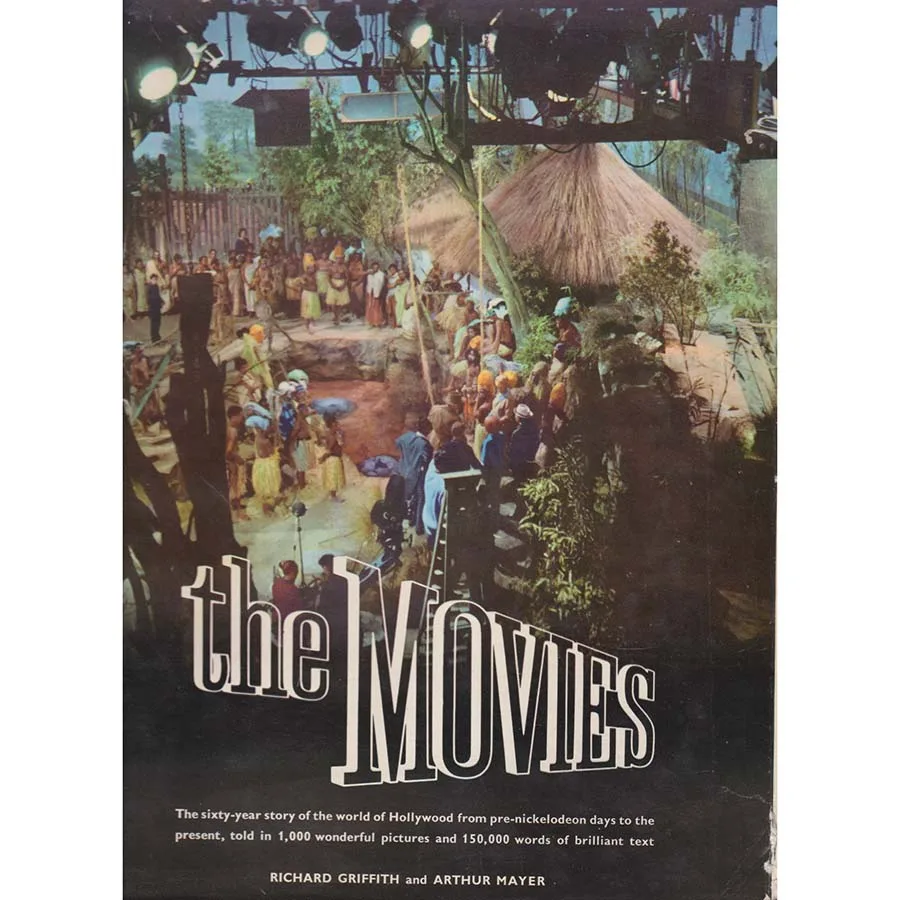
Publisher: Spring Books
Format: Hardback
ISBN: none
Here’s a long, quirky and suitably cinematic Crappy Old Books version:
The Movies (1964) by Richard Griffith and Arthur Mayer – Spring Books
Before streaming services, before multiplexes, before trailers were two minutes long and somehow still managed to show you the entire film, there were simply the movies.
And this book takes them seriously.
The Movies, written by Richard Griffith and Arthur Mayer and published by Spring Books in 1964, is a substantial illustrated history of cinema from its early beginnings through to the mid-twentieth century, tracing the development of film as both entertainment and art.
This is cinema before algorithms decided what you might enjoy.
Before every film franchise required a cinematic universe.
Before audiences had to sit through eighteen production logos before the opening scene.
Griffith and Mayer look back across the extraordinary development of motion pictures: the silent era, the arrival of sound, the rise of Hollywood, major stars, directors, studios, genres and the technical changes that transformed flickering novelty into one of the dominant cultural forces of the twentieth century.
It is, essentially, a grand tour of film history from a time when that history was still relatively young.
Published in 1964, the book has the fascinating advantage of being both retrospective and contemporary. It could look back on the silent pioneers and the golden age of Hollywood, but it was also produced when many of the great names and traditions of classic cinema were still part of living memory.
That gives the book a flavour modern histories cannot quite reproduce.
This was written before people spoke about “classic cinema” with quite the same museum-piece reverence. Many of the stars discussed were still famous household names, and plenty of readers would have remembered seeing some of the earlier films during their original releases.
The illustrations are a large part of the attraction.
Old film stills, portraits and production images give the book that wonderful mid-century cinema-history feel, when publishers could fill pages with dramatic black-and-white photographs and trust that nobody would complain they had not been optimised for a phone screen.
You can browse it as a history.
You can use it as a reference.
Or you can simply flick through it and admire a period when film stars were photographed through enough soft focus to make everyone appear to exist in a permanent cloud of expensive cigarette smoke.
The story of the movies is, of course, also the story of technology.
Silent film became sound.
Black and white became colour.
Small studios became huge businesses.
Cameras became more sophisticated.
And audiences gradually progressed from being astonished by moving images to complaining that the cinema popcorn was too expensive.
Progress comes in many forms.
This copy is in Good condition, with the main book surviving nicely.
The dust jacket is tatty around the edges, showing the kind of wear that tends to accumulate after sixty years of shelf life, handling and general existence.
In other words, the jacket has seen a few sequels.
It may not look premiere-night pristine, but the wear gives it exactly the sort of vintage character you would expect from a large film book published in the 1960s.
Ideal for film buffs, collectors of cinema history, lovers of old Hollywood, students of popular culture or anyone who feels modern films could benefit from fewer explosions and more people standing dramatically beside a staircase.
Also a good choice for those who enjoy books that can sit impressively on a coffee table while silently implying that the owner understands German Expressionism.
Sold by Crappy Old Books, where every old film book gets another screening and slightly tatty dust jackets are treated as evidence of a long and distinguished run.
ISBN: None
Condition: Good
Dust jacket: Tatty around the edges
Keep browsing: See more Film books Other books by Richard Griffith and Arthur Mayer
